


The Journal
Read the latest articles on mental health and the benefits of therapy. Discover curated tools and recommended resources to support you on your journey of self discovery.



Communicating with Your Partner When One (or Both) of You Have ADHD
What you see in a child with ADHD probably looks different from what you see in an adult with ADHD. It manifests in various ways across genders and life stages. In children, you may see restlessness and impulsivity. In teens, it may look like avoidance and emotional intensity, often coupled with academic struggles.



Can Couples Communication Books Help Our Relationship?
Couples’ communication books are quite popular, and for understandable reasons. Not only are they private, they’re also accessible and often written by people who want to offer guidance for navigating common relationship challenges. But the underlying question is, do they work? And if so, how?

Do We Have to Talk About Sex in Couples Therapy?
For some couples, the thought of the discussion can bring relief. There’s finally a space to discuss sensitive issues that have become a wedge in the relationship. But for others, the thought of having to explore sex is enough to make them hesitate even to make the appointment.





How Your Body Remembers Trauma
Surviving trauma often means holding many conflicting truths at the same time. For example: I know my environment is safe, but I don’t feel that way. At our West Ottawa therapy centre, our trauma therapists use parts work to encourage you to identify and advocate for different “parts” of you, like the part of you that’s angry at your body for panicking and also the part of you that wants your body to feel safe.

Social Media Dependence: Why Your Brain is Not the Bad Guy
If your teen notices the pattern and - on top of the burnout - feel confused and guilty about why they seem to keep going back for more when their nervous system is already fried. We address this in the therapy office all the time - social media isn’t designed to make us happy, it’s just designed to make us look.
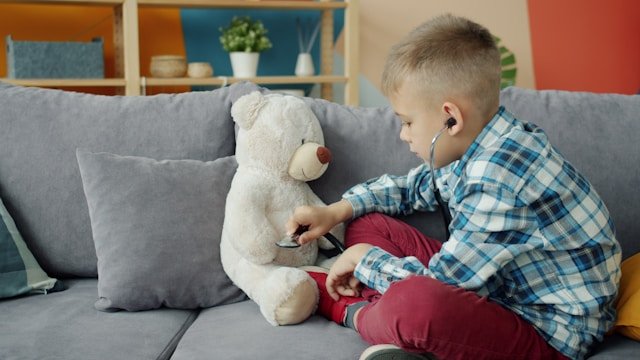
Play Therapy: The Power of Pretend
Most of us think play is just for fun (and don’t get us wrong, it is fun), but play is a way for children to communicate in a language they understand. In the same way that adults use hypothetical scenarios to explore novel solutions, children use pretend play to consolidate, revisit, and interpret the piles and piles of brand new information they absorb every day.

Understanding Sensory Processing Challenges in ADHD
ADHD changes the way your nervous system regulates attention, arousal, and inhibition. It has more to do with an inability to self-regulate than it does with a lack of attention. This is an important factor worth noting since it affects how your brain responds to sensory input from your environment.

What Does ADHD Feel Like?
What you see in a child with ADHD probably looks different from what you see in an adult with ADHD. It manifests in various ways across genders and life stages. In children, you may see restlessness and impulsivity. In teens, it may look like avoidance and emotional intensity, often coupled with academic struggles.

Skills Teens Need for Adulthood and How to Help
Research in developmental psychology consistently shows that adolescents have a deep, biologically driven need for autonomy. Teens aren’t necessarily being defiant for the sake of being defiant. They are actively building the foundation for their transition into adulthood and beyond.

Ambiguous Loss: Coping with Unresolved Grief When There’s No Closure
Ambiguous loss is a form of grief without clear closure - when someone is physically present but emotionally absent, or gone without explanation.

How to Provide Guidance and Support for Teens Who Are Grieving
Grief can feel overwhelming for teenagers, who are still learning how to regulate intense emotions and make sense of loss.

Pt. 1 - Communication Skills for Couples
Most couples assume they have a communication problem when, in reality, they are navigating subtle drops in felt safety. Skills can only be practiced when these conditions are met…

What You Need to Know About Teen Fawning
Recognizing the “fawn response” in teens and how to support them in feeling more confident and calmer in relationships.

Being New to Somatic Therapy is the Norm
Many of the clients I’ve worked with who end up doing a significant amount of somatic therapy didn’t start off that way. Even when we progressed into mostly somatic work together - sessions that were much “quieter” or worked in meditative states - we would still have sessions where there was more talking.
Book a Free Consultation
Book a free initial consultation call, so we can discuss your unique journey and guide you to the best fit for your needs