
Play Therapy: The Power of Pretend
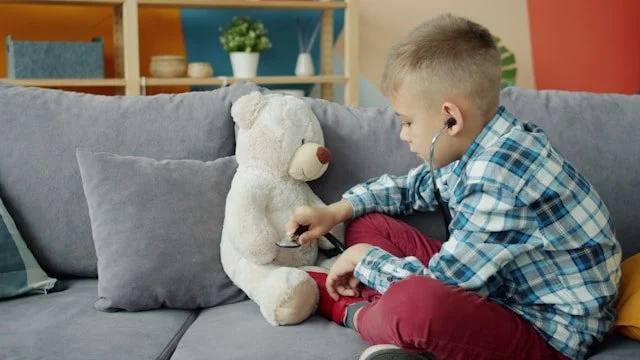
As parents, we sometimes have a hard time relating to our children’s play. Like all humans, children engage in imaginative and magical thinking - just think of the times you’ve mulled over how good it would feel to win the lottery! Our imaginations serve a variety of functions, but imaginative play is an instrumental behaviour - children use it to play out fears, possibilities, and express interests and feelings.
Imaginative play is crucial to children and grown-ups alike. As adults, we still use the skills we learned as children through imaginative play to facilitate imaginative problem solving. Think of a time you used your imagination to rehearse a sensitive conversation with a loved one, or to envision a goal and plan how to get there.
The Psychology of Play
You think your child is The Coolest. We do too! But as extraordinary as they undoubtedly are, they likely don’t yet have all the skills you do as an adult to notice, identify, and communicate your emotions and needs. For example, your child might have the language to say they can’t go to school because they have a stomach ache, but not to articulate that the ache is really worry. Maybe they blow up at school or at home, but they struggle to answer or seem to be making something up. Maybe you know they’ve been struggling with something lately, but they just can’t or won’t open up to you.
Thisis where play and – play-based therapy – comes in. Most of us think play is just for fun (and don’t get us wrong, it is fun), but play is a way for children to communicate in a language they understand. In the same way that adults use hypothetical scenarios to explore novel solutions, children use pretend play to consolidate, revisit, and interpret the piles and piles of brand new information they absorb every day. On the outside they’re playing pretend “house” or “school,” but on the inside they’re learning about roles and responsibilities. On the outside they’re staging imaginary stories with toy characters, but on the inside they’re learning about how people communicate and process emotions.
What Happens in Play Therapy?
At our west Ottawa psychotherapy centre, our play therapists guide kids to explore difficult emotional territory in the safe space that play offers.
A child therapist may use puppets or miniatures to help give a voice to feelings your child struggles to access. They might provide sensory stimulation like sand boxes or weighted stuffed animals to help ground your child when they are dysregulated, or use books and art to explore other perspectives. Some activities our child therapists have done:
Use figurines in a sand tray to help children play out scenarios that have happened or how they feel about them.
Bring out stuffed animals to help a child give voice to their worries or the different “parts” of themselves.
Placed a stuffed animal on the child’s belly to teach them a breathing exercise where they “breathe” their buddy up toward the ceiling and back down to promote emotion regulation
Fun fact: until around the age of 7, children identify with and enter into relationship with toys, figurines, or puppets and authentically engage. That’s why your children may do things that are hard for them when you “make the bunny talk”, such as getting dressed in pajamas or talking about their feelings.
Is Play Therapy a Good Fit for My Child?
If you’ve been noticing shifts or patterns like:
Meltdowns or shutdowns
Recent onset of worry/avoidance
Difficulty regulating emotions
Intense or repetitive themes in their play
Play therapy may be a good fit for your child. Therapy can be somewhere your child feels safe to explore those patterns, and you can breathe easier too. If you’ve noticed any of these changes, feel free to reach out.
At the Wren Centre, it’s our job to uplift children and remind parents that they’re not alone. Our Ottawa-based child therapists would be honoured to support your family.
Here are some other Therapy for Children posts


Explore The Wren Centre’s in west Ottawa guiding principles for screen use in families. Learn how child therapy and teen therapy support healthy tech habits, connection, and mental wellness.